(see Using AI in Genealogy and Family History for a detailed description of how this was created with Google Gemini)
Chapter VII: The Cold Ash and the New Dawn
The winter wind that blew across the high plateau of the Jura in February 1791 brought no mercy to the stone hearths of Montécheroux. Within the low-ceilinged farmhouse where the Voisards had worked the soil for generations, the air was thick with the bitter smoke of spruce wood and the terrifying rasp of a child fighting for breath.
Jean Germain Voisard stood by the timber cradle, his knuckles pale and raw. Beside him, Marie Angélique knelt on the cold flagstones, her fingers tangled tightly in her apron. Only four days had passed since the frozen turf in the churchyard had closed over little two-year-old Pierre Louis. Now, the fever had come for four-year-old Jean François.
The door creaked open against the howling draft, and Pierre Claude Lachat stepped in, shaking the white rime of frost from his wool cloak. The uncle did not speak; the rattling cough in the small bed said what words could not. When Curé Morel arrived from the parish house, stamping the snow from his leather boots, he carried the oil of extreme unction. Before the dawn broke over the ridges of Saint-Hippolyte, the room was silent.
When they walked the path to the cemetery on the morning of February 24th, Pierre Claude walked shoulder-to-shoulder with his brother-in-law Jean Germain. Together with Master Mauvais, the village schoolmaster, they took the quill in the rectory and inscribed their names into the parish parchment. The ink pooled dark beneath Jean Germain’s trembling hand—two sons surrendered to the earth in less than a week.
+——————————————————-+
| “In the year of our Lord 1791… buried in the
| cemetery of Montécheroux… | Jean François, aged 4,
| and Pierre Louis, aged 2…”
+——————————————————-+
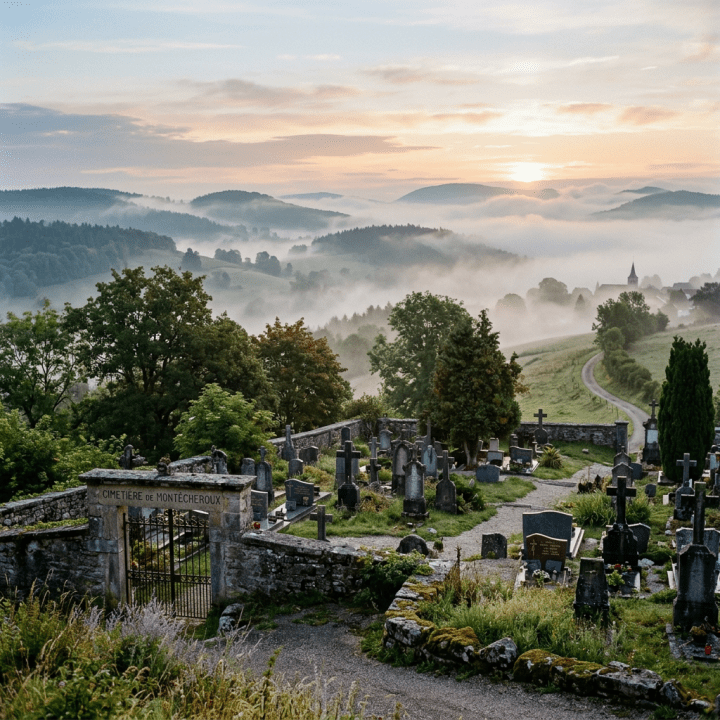
Spring brought the greening of the pastures, but no respite from grief. On the twenty-eighth of May, when Marie Angélique labored through the night, the midwife Marie Françoise Pocquerier was summoned in haste from Chamesol. The newborn son arrived into the world too frail to sustain life’s first full breath. Knowing there was no time to cross the valley to the church, the midwife cupped water in her weathered hands and spoke the solemn words of the ondoiement over the infant’s brow. By evening, the child had slipped away, leaving Jean Germain and Marie Angélique to bear the grief of a third empty cradle.
Yet the bloodline of the Jura plateaus was forged of iron and stubborn endurance. That autumn, when old aunt Françoise Agnès Voisard was laid to rest at sixty-seven years of age, Jean Germain stood by the grave not merely as a mourner, but as the enduring head of his house. Taking the parish pen from Curé Morel, he firmly inscribed his distinctive signature—jg voisard—a testament that the family remained unbroken.
By the autumn of 1792, the winds blowing across the Franche-Comté carried the thunder of a nation reborn. The ancient kingdom was gone; in Paris, the monarchy had fallen, and in the hamlets of the Doubs, the bells rang for the First Year of the French Republic.
In the October chill, warmth returned to the family hearth. In the home of Adam Brisechoux and Jeanne Marie Voisard, the sharp, healthy cry of a newborn boy broke the quiet of the fields. They brought him before the font and named him Théophile. In the register, Father Faivre dipped his pen and wrote the bold new date: Première année de la République.
Three weeks later, on the nineteenth day of November, the heavy boots of Mayor Jean Nicolas Abram echoed upon the wooden floorboards of the presbytery. Accompanied by Citizen Lavoir, the mayor presented the decree of the National Convention to Pastor Louis Christophe Cuvier.
“By order of the law,” Mayor Abram declared, his tricolor sash bright against his woolen coat, “the books of the sacraments are closed. Henceforth, the Republic alone shall record the entrance, the unions, and the departure of citizens.”
With a final, sweeping flourish of ink, the old church ledgers were shut forever. The registers of kings and bishops were retired into the town chests, but out in the rolling hills and limestone valleys of Montécheroux, the plows turned the soil, the clockmaker’s loupes caught the morning light, and the descendants of Lachat, Jourot, and Voisard lived on.
 Gathering Leaves