I have written about my great-grandfather’s family and their experiences at the tail end of the Civil War in a number of blog posts on this site. In the construction of the book, Gathering More Leaves, those blog posts became the foundation of a chapter that detailed the events experienced by my great-great grandparents in the final year of that horrible war.
While reviewing the chapter that covered those events at the tail end of the war between June of 1864 and May 1865, I realized that for some events there was a very small window in which they could occur. Based on documentation, we know of certain events including where and when they occurred.
For example, according to her obituary my great great grandmother, Martha Prothro Dobbs, supposedly had a talk with General Sherman when he came through Marietta in the summer of 1864 (see What Miss Mattie Said to the General).
The obituary does not tell us when this conversation took place but I believe I’ve determined when it must have occurred. Also, I have discovered something that blows up the previous narrative, making in impossible for Martha to have been in South Carolina in the Winter of 1865. (Now I have a chapter to rewrite 🙁)
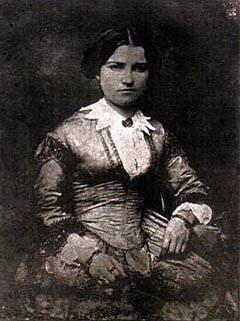
The family’s presence in Marietta between July 3rd and July 4th is confirmed by the obituary of my great-great-grandmother, who passed away in May 1928 (two days before my mother was born). It stated that she “distinctly recalled a talk she had with the federal chieftain during his passage,” referring to General Sherman. Born in Aiken, South Carolina, in 1835, Martha remembered Sherman and his army passing through Marietta during the Civil War. (Source: Atlanta Constitution May 10, 1928)

Although the exact details and timing of this conversation are unknown, I surmise it must have occurred on July 4, 1864 and no later than the 5th because after that Sherman moved his headquarters to the field.
With Martha were her three small children—my great-grandfather James (age 6), Lillian (age 7), and Evan (age 4).
Here is what I discovered when looking up the ages of her children: In early July of 1864, Martha may not have been aware at the time that she was pregnant with her fourth child, Martha Prothro Dobbs, who was born on February 2, 1865 (in Georgia). The 1870 census record list five year old Martha’s birthplace as Georgia, as does the 1880 census.
This mean that only the father, D.J. Dobbs, was in South Carolina after Martha’s father passed away in December, 1864. It means that Martha and the children, including my great grandfather, remained in Union-occupied Marietta. On that July 4th, my great-grandfather celebrated his sixth birthday.
So, where was Col. D.J. Dobbs when Marietta fell to Sherman’s Army on July 3rd?. A year earlier, his military commission had been put on hold by the Governor, who instructed him and other militia officers to join the State Guards as private soldiers. This was done by Gov. Brown primarily to prevent Georgians from being taken out of state for service in Virginia. Had D.J. been present during his wife’s conversation with General Sherman, it is likely he would have been taken prisoner.
In 1860, the census recorded that old Colonel David Dobbs, D.J.’s father, resided in Marietta with four orphaned grandchildren. His grand mansion now overlooked the town square, which had been converted into a federal encampment. The 1860 slave schedule indicates that Colonel Dobbs owned 64 enslaved individuals. Including those owned by his son in the same year, the family’s total number of enslaved persons was 72.
Colonel Dobbs’s household, consisting only of himself and his grandchildren, clearly did not require 64 enslaved persons for its operation. The vast majority were hired out to other plantations, worked in one of Colonel Dobbs’s mills, or were employed by the railroad, specifically for the task of loading freight cars with cotton bales and other produce.
But now, where were they? With the arrival Sherman’s Army all 72 people owned my family were now free. Many stayed in or near Marietta to await stable employment or family reunification, some attached themselves to Union camps, and some were transported to contraband camps farther north.
The Dobbs family were members of the First Baptist Church of Marietta. The Old Colonel had been the church’s clerk in the 1840s and 50s, and since the mid-1850s, D.J. was the keeper of records for the church. First Baptist was integrated on the outside but segregated inside. Basically, the masters brought their slaves to church. The enslaved members of the congregation sat the balcony and prayed the same prayers as the white folk in the seats below. In 1862, DJ Dobbs recorded that the black church membership was 200, twice that of the white membership. (For details see A Peculiar Institution )
One clue as to when D.J. Dobbs left town, the church records end in May of 1864. In 1866, after the war’s end, 80 blacks left the First Baptist church and formed the Zion Baptist Church of Marietta. Brother Ephraim Rucker, a former servant of the Old Colonel, became the church’s first pastor.
Union Army Advances in Cobb County (July 1964)
Given the situation, I felt the need to examine the timeline in detail. Here’s the timeline of events leading up to the end of the war:
July 2–3 – Battle of Kolb’s Farm – The Confederate Army of Tennessee under General Joseph E. Johnston evacuated its defensive position around Kennesaw Mountain, retreating across the Chattahoochee River and moving into Atlanta’s inner defenses. This is the latest the family would have left the plantation for Marietta.
The vast majority of Marietta’s civilian population had already fled south toward Atlanta in the weeks leading up to the city’s occupation. They evacuated along with the retreating Confederate Army of Tennessee under General Joseph E. Johnston.
By the time Union troops entered Marietta on July 3, a correspondent noted that “probably not more than twenty houses are occupied.” Many homes were left mutilated and gardens destroyed, so any remaining civilians likely had little incentive to stay.
Civilians wanting to flee Marietta for Atlanta needed to do so no later than July 4, 1864, to have an unimpeded journey. After that date, Union forces made the crossing increasingly difficult as they closed in on the Chattahoochee River. Here is a timeline detailing the Union advance following the fall of Marietta on July 3, 1864:
July 4: In the predawn hours, Confederate General Joseph E. Johnston’s army evacuated their defensive positions near Smyrna Station and fell back across the Chattahoochee River, removing the last natural barrier protecting Atlanta.
July 5: Union forces, having occupied Marietta, began their own southward march toward the Chattahoochee. On the same day, a Union cavalry unit destroyed mills in Roswell, further escalating the conflict and causing panic. David Dobbs owned a mill in Roswell
July 8–9: Union General John M. Schofield’s army succeeded in crossing the Chattahoochee at Sope Creek and Isham’s Ford, establishing a bridgehead on the south bank.
July 9: Realizing his position had been outflanked, General Johnston ordered the final Confederate retreat across the Chattahoochee. The Confederate army then entrenched within Atlanta’s formidable outer defenses.
July 17: With the main Confederate army fully withdrawn behind Atlanta’s defenses, Union General William T. Sherman began moving his entire force across the Chattahoochee.
For any civilians still in Marietta on or after July 5, their path south would have been increasingly difficult and perilous due to the encroaching Union army. After July 9, the Confederate army was no longer west of the river, leaving no organized military force to protect civilians crossing toward Atlanta.
At some point David J Dobbs left Atlanta and traveled to South Carolina presumably by railroad. Civilians attempting to escape Atlanta by rail to South Carolina would have had to leave no later than mid-August 1864 to avoid getting caught up in the final, desperate phase of the city’s siege. By August 31, the last functioning rail line out of the city was severed by Union forces, making escape by train impossible.
Union army’s advance on Atlanta’s Railways
July 22: Following the Battle of Atlanta, Union forces cut the Georgia Railroad, which ran east to Augusta and could provide a connection toward South Carolina.
Late July-August: As General William T. Sherman’s forces closed in, other rail lines were frequently threatened and raided. Hood’s Confederate army extended its lines to protect the Atlanta & West Point Railroad and the Macon & Western Railroad, the city’s last remaining supply lines.
August 18: A Union cavalry raid briefly damaged the Macon & Western Railroad near Jonesboro, but the Confederates quickly repaired it.
August 25: Realizing that cavalry raids were insufficient to completely disable the rail lines, Sherman began moving a large portion of his infantry forces south and west in a decisive flanking maneuver.
August 31–September 1: At the Battle of Jonesborough, Union forces successfully seized control of the Macon & Western Railroad, the last line supplying Confederate General John Bell Hood’s army.
Night of September 1: With all rail lines severed and supplies cut off, General Hood ordered the evacuation of Atlanta. Any remaining citizens who had not already left were now trapped without rail access.
November 13, 1864: The old Col. David Dobbs was forced to witness the destruction of his beloved college, Georgia Military Institute (GMI) which he founded in the early 1850s.
Timeline of Bombardment of Atlanta
The bombardment of Atlanta began on July 20, 1864.
During the Atlanta Campaign of the Civil War, Union General William T. Sherman initiated the artillery shelling as his forces laid siege to the city. The bombardment continued for five weeks while his troops worked to cut the railroads supplying the city.
July 9 – Gov Brown activates the State Guard
Amid the excitement and possibly contributing to it came another of Governor Brown’s proclamations issued from Milledgeville on 9 July calling for more men at the front. This one urged every man – really every adolescent – from 16 to 55 to report to major general Gustaves W Smith of the Georgia militia in Atlanta.
As for, Col. Dobbs rank while he was active in the State Guards. In the summer of 1864, he would have been told by the governor to put his commission on hold and that he later reverted back to that rank in the Georgia Militia. We know that for the rest of his life had the title of colonel.
The Dobbs family were close friend’s of Joe Brown’s family, and it is possible that Col. D.J. Dobbs received special favors from the governor.
December 1864 – Evan “the younger” Prothro died 6 December 1864. We have proof that D. J. Dobbs was in South Carolina in the Winter of 1865. We know this because his signature appears on a number of receipts including the one shown below which he signed on Feb 7 1865 in Barnwell District, South Carolina.

The receipt shows that DJ Dobbs received from his brother-in-laws, the executors of father-in-law’s estate, $1542.25 in Confederate money. A subsequent document shows that DJ used that money to purchase several pounds of shoe leather – both top and bottom – plus, an old mule, and some silverware from the estate. What he did with the leather it’s unknown. Perhaps he had boots made for himself and his fellow soldiers. (See The Fate of Col. David J Dobbs (May 1865))
It is difficult to say where D.J. Dobbs and his unit were between September 1864 and his capture on May 23, 1865 – excluding his time at the Prothro plantation Dec 64 /Feb 65. During this time, the Georgia State Guards were primarily engaged in local defense against Union invasions. Defending against Sherman: The guards’ main purpose was to defend local areas as General William T. Sherman’s forces invaded Georgia. The guards fought in many skirmishes, though they were no match for the Union’s main army.
So far I’ve not found an explanation of what Georgia State Guards were doing in Greenville South Carolina on the 23rd of May 1865. My guess is they were there, deep in South Carolina’s upcountry, trying to get out of the way of the triumphant union army.
Stoneman’s Raid and Greenville: In the spring of 1865, Union Major General George Stoneman led a cavalry raid through western North Carolina and into South Carolina. D.J.’s unit was likely among the last Confederate holdouts, captured as Stoneman’s forces swept through the area.
Capturing Confederates in May 1865: Records show that Union cavalry were in Greenville and Anderson, South Carolina, in early May 1865, capturing retreating Confederates. This would align with DJ’s capture date.
David J Dobbs is listed on the muster roll as a private in company A of the 7th regiment Georgia infantry. He was captured as a prisoner of war on May 23, 1865 Greenville South Carolina by forces under the command of General S.B. Brown and was paroled at Hartwell Georgia.
The 7th Georgia Infantry (State Guards), unlike its Confederate States Army counterpart, was a militia unit composed of men too young, too old, or medically unfit for regular army service.
Final days of the 7th Georgia State Guards
Continued resistance: While General Robert E. Lee surrendered the Army of Northern Virginia on April 9, 1865, the Confederate government’s flight from Richmond and other surrenders continued into May and June. Small, local militia units like the Georgia State Guards remained in operation and were among the final Confederate combatants to be apprehended.
Stoneman’s Raid: The capture of David Judson Dobbs in Greenville, South Carolina, on May 23, 1865, occurred during the final stages of the Civil War in the region. This area saw Union cavalry activity and raids as federal forces hunted down the fleeing Confederate government and quelled the last remaining pockets of resistance.
Capture by Union forces: The “General SB Brown” on the muster roll was likely Union Colonel S. B. Brown, whose forces were involved in Stoneman’s Raid and other Union sweeps through South Carolina and Georgia in April and May 1865. Brown’s troops were known for their pursuit and capture of Confederates, including Jefferson Davis, and their raids often resulted in harassment and the plundering of homes.
Parole at Hartwell, Georgia: David Dobbs’s parole in Hartwell, Georgia, was a common procedure for soldiers who surrendered late in the war. Following the collapse of the Confederate military structure, many soldiers were individually paroled by local Union commanders near their homes rather than at a major surrender location like Appomattox. The parole was an agreement not to take up arms against the Union again.
 Gathering Leaves