Faced with an early termination fee for my mistakenly purchased annual Adobe Premiere Pro subscription (that is, annual paid monthly), I decided on a new video project instead of canceling. I’ve dubbed it “A Plan 9 From Outer Space”—If you know, you know..
The project involved restoring and then animating a series of old photographs using Adobe Firefly, with the final video edited in Premiere Pro.
I’ve begun step one by using Adobe Firefly to restore and colorize photos of my maternal great-grandmother’s family. A distant half-cousin sent me a treasure trove of these photos in 2019. Since this cousin was not related to my great-grandmother, Helen Spiegel, I received the complete collection of photos that my grandfather had sent to his half-sister over his lifetime.
For the Firefly AI image generator, I used the following prompt: “Restore this photo, removing noise, dust, and scratches, and convert to color.”
For the Firefly AI Image-to-video generator, here is the prompt I used: “Animate this historical portrait with subtle, realistic motion. Keep the subject’s facial features and historical aesthetic accurate. Add gentle eye blinks, slight head movement, and soft natural expression changes. Preserve the original lighting, texture, and age of the photograph. Avoid stylizing or modernizing the subject.“
Two observations, one is that for November, Adobe was charging zero credits for the generative AI image generator. Also, I saw that I could purchase 4,000 credits for $20, and this would allow me to make forty 5-second videos. Yet the image-to-video generator was fixed at 8 seconds and could not be changed. Thus instead of 40 videos I only got 10, two of which I threw away because I messed up something.
Images
These are only some of the images that were enhanced using generative AI. All images are included in the video.
I have the original photographs shown below, with the exception of the first image, which was provided to me as a scan of the original. All the photographs were taken as black and white images. Some were taken in a professional studio, as indicated by the framing, while others were taken with a Kodak Brownie camera, popular with amateur photographers starting in the early 1900s.
For those not familiar with the brownie camera here’s a description of the camera from Wikipedia: “ The Brownie was a basic cardboard box camera with a simple convex-concave lens that took 21⁄4-inch square pictures on No. 117 roll film. It was conceived and marketed for sales of Kodak roll films. Because of its simple controls and initial price of US$1 (equivalent to $38 in 2024) along with the low price of Kodak roll film and processing, the Brownie camera surpassed its marketing goal.
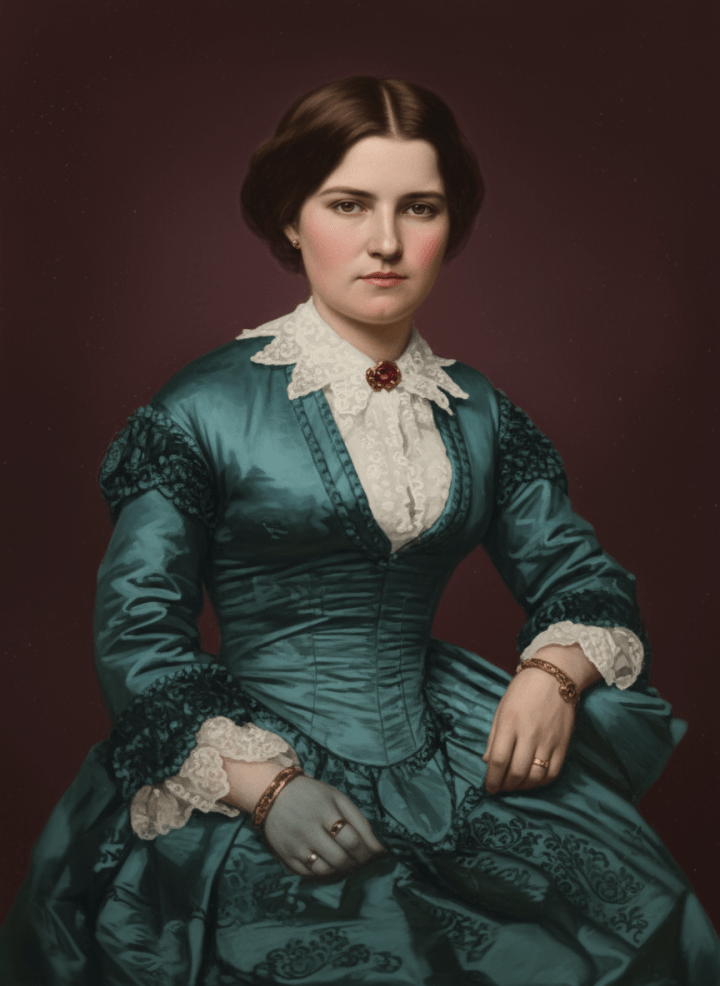

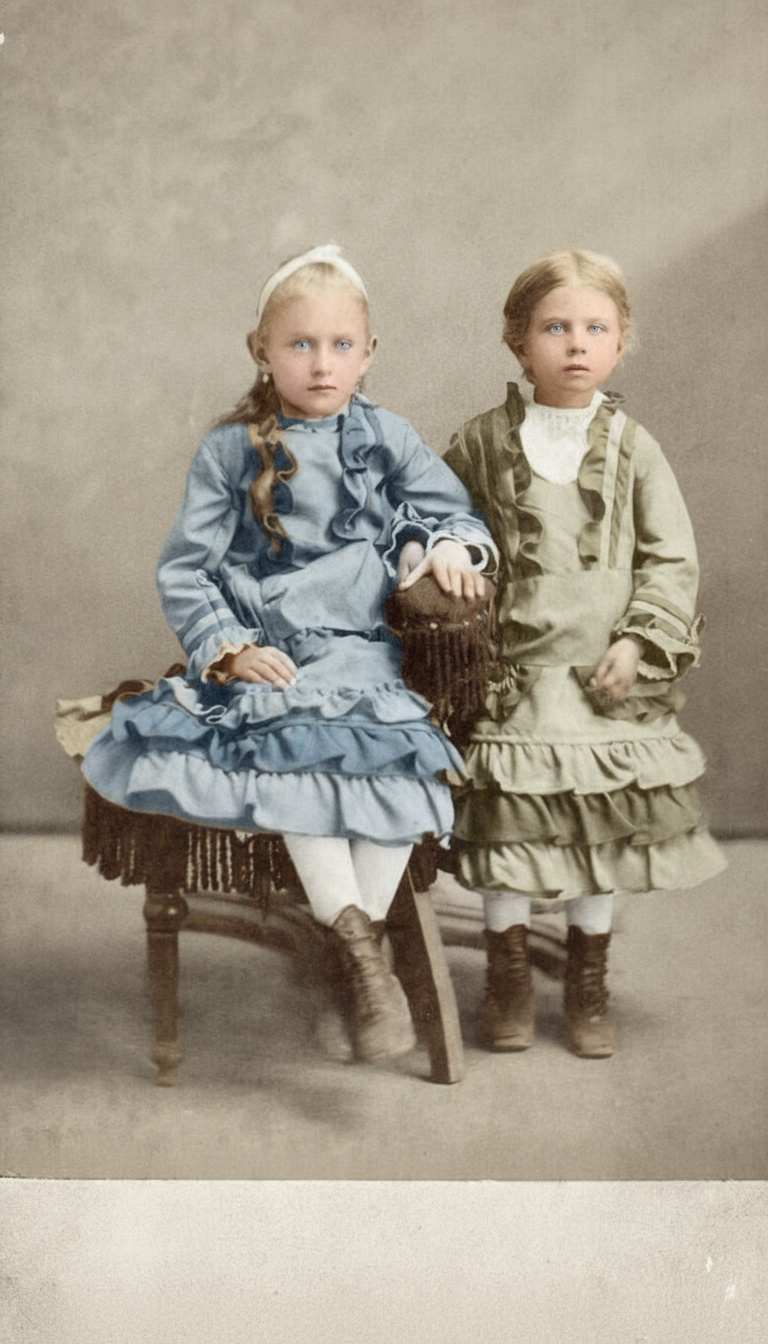
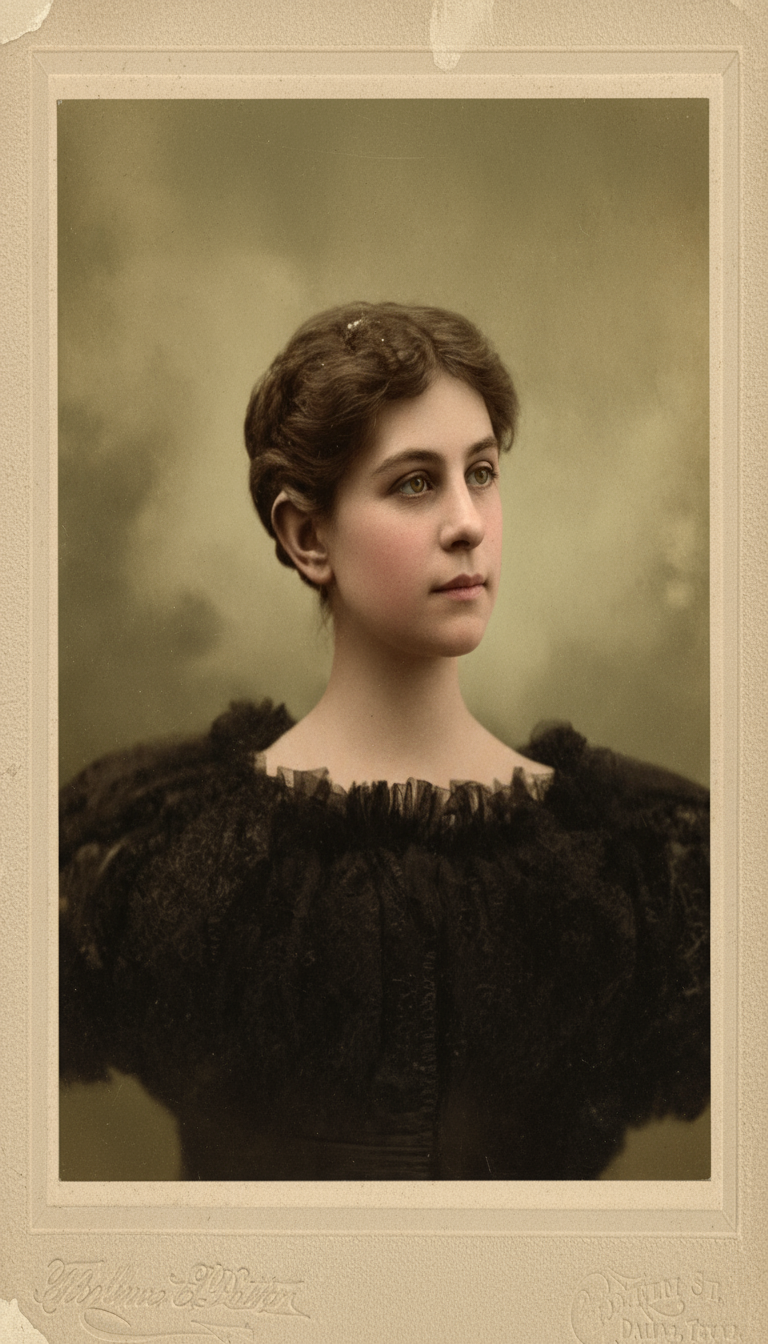
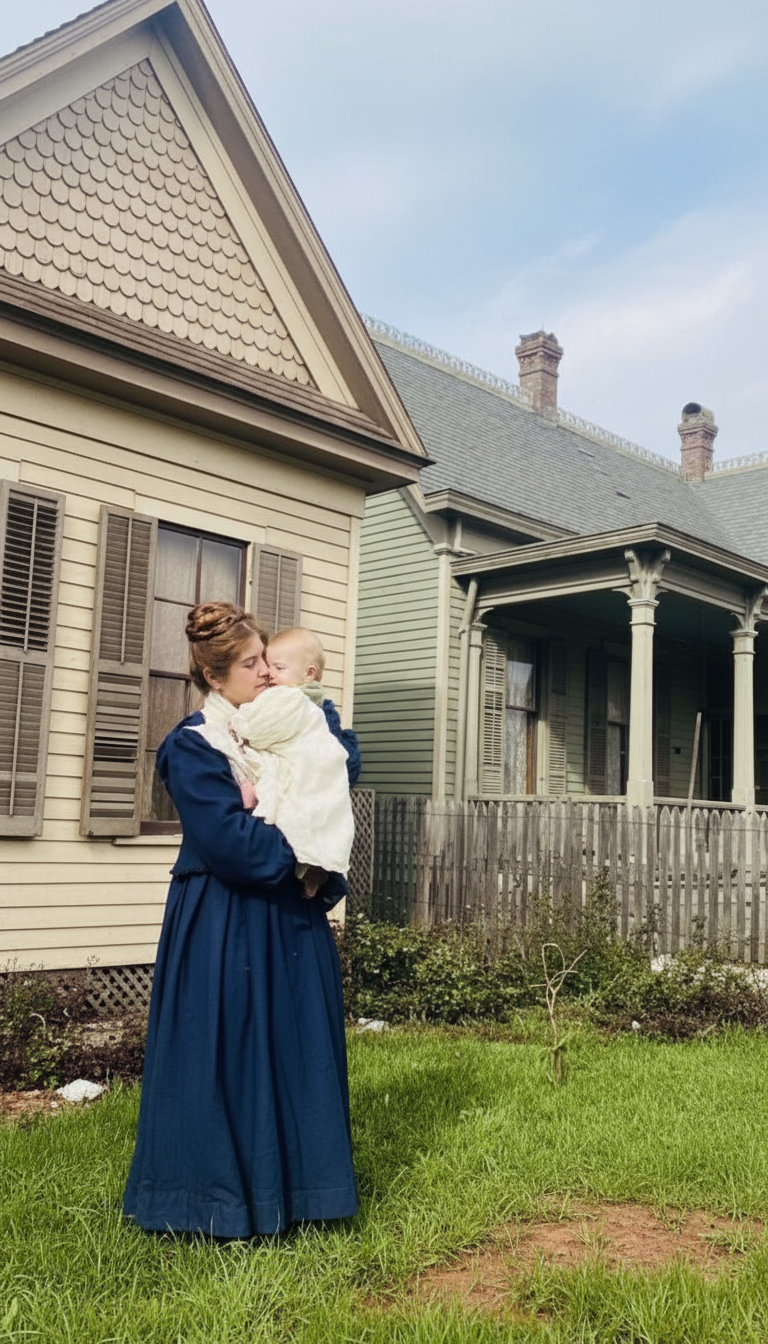
Photograph from a Kodak Brownie camera popular starting in the 1900s.

Photograph from a Kodak Brownie camera popular starting in the 1900s.


(around the time that my mother was born)
Videos
I created two versions of the same video, one of which is a short, TikTok-style format. The current upload is the third iteration of the TikTok video. Notably, this version received over 700 views on its first day.
The two previous versions of the video were blocked because the music used, which I believed to be royalty-free, turned out not to be.
Despite being blocked, the first version had already garnered over 300 views in approximately 12 hours. This is a remarkable result, achieving 100 times more views in the same timeframe than the podcast version of the video.
Both the first two versions Of the Tick Tock Style video we’re done on my desktop using Premiere Pro and then uploaded to YouTube. for the third version I discovered there was a feature in YouTube Studio that would allow me to edit and replace the audio with audio tracks from YouTube Studio that were guaranteed to be royalty free. that is how I fixed the issue with the YouTube shorts version of the video.
Upon discovering a feature that could erase flagged audio, I used it to address the alleged copyright violations in 23 of my podcast videos. While these violations didn’t block viewership, they would prevent future monetization.
However, the results of using this feature were inconsistent and somewhat bizarre. For instance, the first three videos were cleared from violations even though the introductory, background, and outro music—the supposedly problematic audio—remained untouched. In contrast, Episode 12 shows a very sloppy attempt to erase the introductory music, as it can still be heard “bleeding through,” though the main background music was left alone.
For some other videos, such as Episode 24, I chose to replace the background music using YouTube Studio’s library of royalty-free music. This worked out well because the replacement music was the right length. A significant limitation of the YouTube Studio music is that nothing is longer than four minutes. Additionally, it is challenging to use this library music effectively because it’s difficult to set the volume low enough so that it doesn’t distract from the monologue while still being audible.
 Gathering Leaves