While browsing the internet, I have on two occasions come across portrait paintings that are presented as depictions of my ancestors. On one occasion, I discovered an image on Ancestry.com that another researcher was using as a profile portrait for our shared ancestor, Evan Prothro. My initial inclination was to simply copy this image and use it as the profile picture for my mother’s 2X great-grandfather. However, I was suspicious so I decided to try a tool that I had not used before – Google Lens. This experiment led me to uncover a hoax, the originator of which will likely never be discovered.
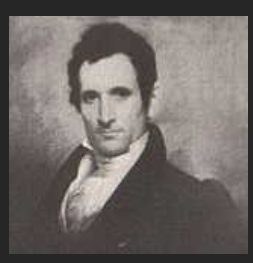
The fact that the image was in black and white made me suspect this was not an authentic portrait of the plantation owner, Evan Prothro, who lived from 1788 to 1864. I believe it was around 2020 when I first discovered Google Lens and realized its potential to help me trace the origin of the image purporting to be a portrait of my 3x great-grandfather. It’s important not to confuse this man with his grandfather (my 5X great-grandfather), also named Evan Prothro. I sometimes refer to the elder Evan as “Evan, The Patriot” and his grandson as “Evan, The Planter.”
The black and white photograph submitted by the Ancestry member appeared to be of an original oil painting. This immediately brought up several questions: its original color, location, and date, as well as the artist. I had no desire to reveal the identity of the person who uploaded the photo, as they likely obtained it from someone else and were probably unaware of the photograph/painting’s origins. Rather than immediately dismissing it, I was intrigued to discover the painting’s origin. Solving the mystery proved to be a very quick process.
As I was attempting to copy the image by right-clicking the image. Here is where I saw the option to “Search with Google Lens.”

I clicked the link and immediately it came back with the truth regarding the source of the image.
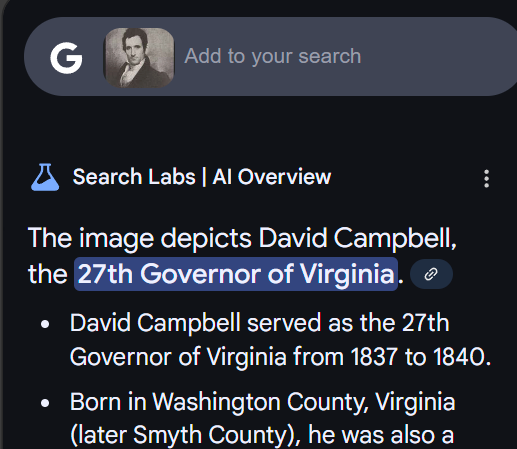
Then today, I discovered that another portrait image that I’d collected, believing it to be authentic, is also a hoax. Though I’m unsure if the same individual was responsible for both.
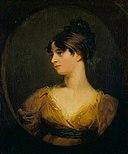
This particular McMullan ancestor is relevant to the Prothro branch only if you are a descendant of Col. D. J. Dobbs and Martha J. Prothro Dobbs, which I am. Theodosia Beck Beazley McMullan Dula was the grandmother of Elizabeth McMullan, who was D. J. Dobbs’s mother and my 5X great-grandmother.
Evan Prothro, the subject of portrait #1, was Martha Josephine Prothro’s father.
To confirm my suspicions, I took the small JPEG file purported to be of Theodosia—which I now know originated from the Wikimedia Commons Library (where all images used by Wikipedia are stored)—and used Google Lens to discover its true origins. I opened Google Lens from the Google Search page and dropped the image onto the page.

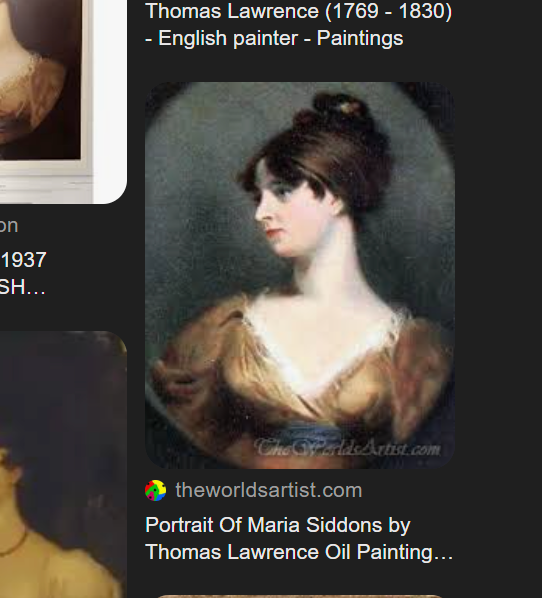
Immediately, the response came back informing me that the painting was a portrait of Maria Siddons, and was painted in 1800 by the English painter, Thomas Lawrence. Even though there is some mystery as to who exactly the painting is of – the title given to the painting is “Portrait of a Lady” – I think we can say for certain that this is NOT a portrait of the then 45 year old Theodosia Dula (pronounced ‘Dooley’), who during this period resided on a plantation in the North Carolina upcountry, deep in the heart of Wilkes County.
Here is a link to one of the results. It is the only one that mentions the name of the subject..
 Gathering Leaves
_-_Portrait_of_a_Lady_-_P39_-_The_Wallace_Collection.jpg)
2 thoughts on “Solving Mysteries with Google Lens”