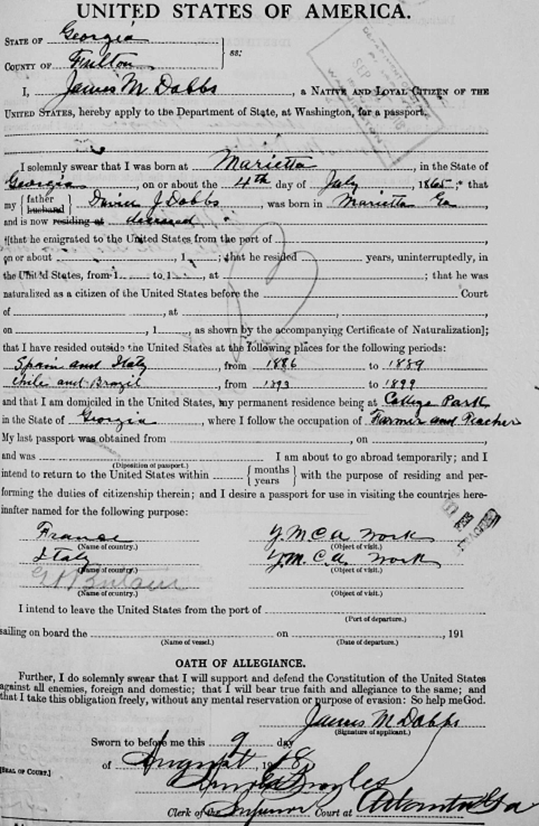
In a previous post, I wrote of how I discovered that my mother’s grandfather lied on a passport application that he filled out towards the end of WWI. As a former Consular officer and recently retired from the US State Department, he had to have known that what he had done was illegal. James Monroe Dobbs, Sr. was born July 4, 1859, yet on more than part of the application for a passport dated 9 August 1918, he wrote that he was born July 4, 1865. He even had a childhood friend who worked for the Georgia state court system sign an affidavit confirming the incorrect birth date.
The purpose of the passport application was to travel to the War Zone in Europe as an officer of the international service organization, the YMCA. On the application, he stated that his destinations were the UK, France, and Italy.
The age fabrication was because the War Department had set an age limit of 55 for persons traveling to Europe during the war. As part of the application package, there was even a letter from the War Department stating that there was no objection to Mr. Dobbs’ travel plans. Today I discovered a little bit more about his trip to Europe during the final days of WWI.
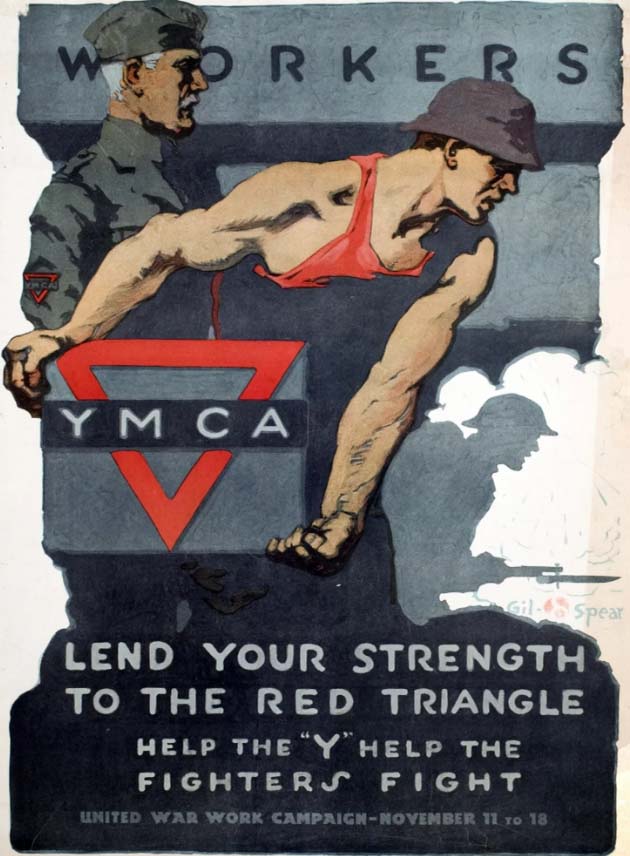
Before the United Service Organizations (USO) came into existence in the early 1940s, the YMCA played a crucial role in the military. It was tasked with maintaining and promoting morale and welfare, a duty proven effective during the Spanish-American War and on the Mexican border. The YMCA’s service was instrumental in producing better fighters. The war work was known by various names, including Red Triangle Work and AEF Work (AEF stood for American Expeditionary Forces, referring to the American army in France). The National War Work Council also financed similar work for French soldiers under the name ‘Foyer du Soldat.’ The YMCA’s work extended to Italy, Greece, Russia, and several other countries, making it a significant player in the war effort.
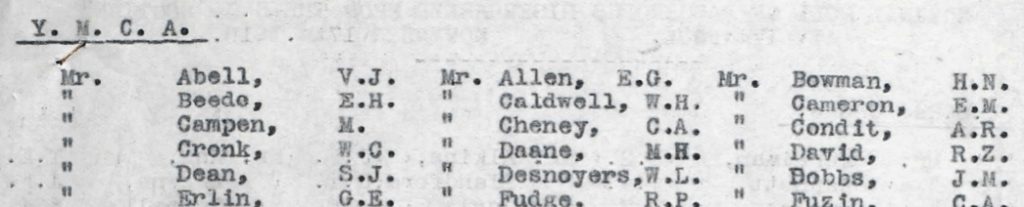
I am curious to learn what my great-grandfather’s ultimate destination was. I located some books published in the 1920s regarding YMCA work in Europe at Google Books. The Y went as far east as Siberia. Immediately after the war, the YMCA followed American occupying forces into Germany, working primarily out of the city of Koblenz. This was called AFG work (i.e., American Forces in Germany). Due to unsettled conditions in the war area and the fact that a peace treaty had not yet been signed, work among young men of Allied countries and prisoners of war was continuing. One of the books titled “History of the Y.M.C.A. in the Le Mans Area” provided details regarding the main AEF embarkation center located at Le Mans, France, covering the period December 1918 to July 1919. The book lists all 634 YMCA personnel serving at Le Mans and in Flanders, but I do not find my great-grandfather listed in this book.
However, I found him on a passenger list arriving at Liverpool six days after the Armistice was signed. The SS Scotian, which sailed from NYC on November 4th, arrived in Liverpool on November 17, 1918. It was a special US Army transport carrying two Army officers, 63 members of the US Red Cross, 32 Knights of Columbus, and 72 representatives of the YMCA.
I am also very curious about my great-grandfather’s experiences during the 1918/19 influenza pandemic. The pandemic spread rapidly due to the movement of troops and populations during World War I. It infected approximately one-third of the world’s population at the time, around 500 million people.
 Gathering Leaves
3 thoughts on “International Man of Mystery-Pt. 5”